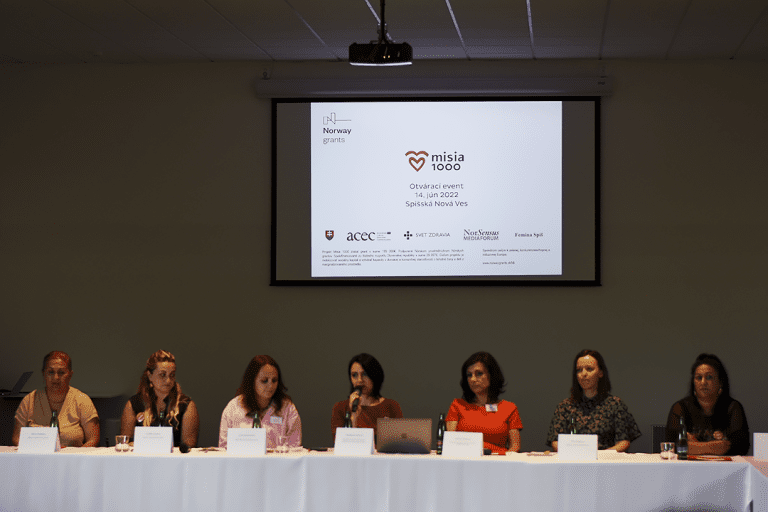
A project called Misia 1000 operates in the vicinity of Spišská Nová Ves. Eleven specialized health education assistants, so-called midwives, help mothers from marginalized communities during pregnancy and after childbirth.
Initiator of the project is Association for Culture, Education and Communication (ACEC), which wants to point out in this way the crucial first thousand days after the child’s conception.
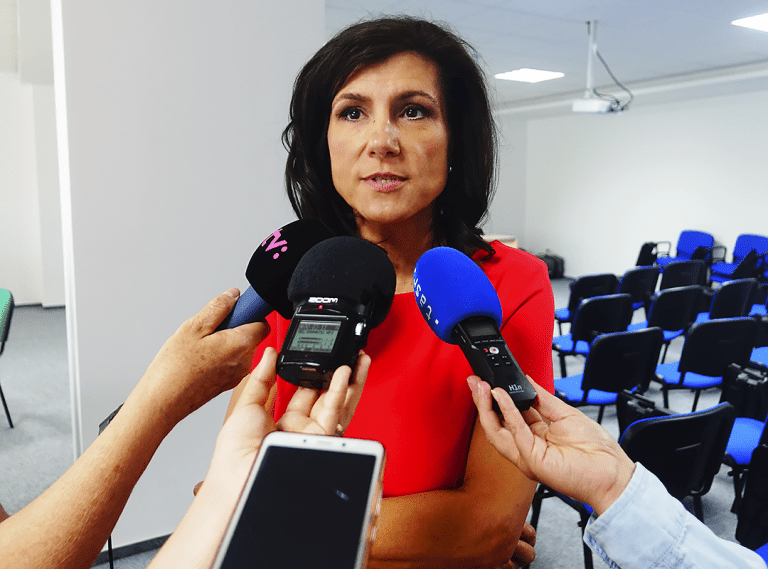
“Through midwives, specialized health education assistants, we build community capacity in the area of caring for pregnant women during their stay in the maternity hospital and after their discharge. In this way, we create communication bridges and develop mutual relations between communities,” explained the director of the Association, Magdaléna Rothová. “In Slovakia, prenatal preparation, necessary postpartum care, or activities to develop parenting skills are almost unavailable for parents who do not have enough financial resources,” she added.
Midwives work in several villages in Spiš. They carry out activities with girls, pregnant women and mothers at home directly in the settlements, but also in the hospital environment. As part of their activities, they cooperate with local government, community centers, helping professions, and health care providers.
Midwives work as part of the project at the Svet zdravia hospital in Spišská Nová Ves in the gynecology-obstetrics and pediatrics department.
“We very much welcome the fact that they speak Romani, thus creating a sense of security for these mothers and children. For example, if the children in the pediatric ward do not have an accompanying person, they often see these midwives as their savior, because they speak their language. In the maternity ward, they help educate mothers as part of lactation counseling,” said Director Renáta Šuláková, praising the presence of midwives in the hospital. “The first thousand days after conception are very important for a child’s life. It provides the basis for the immune system, metabolism and brain development. And it is our important colleagues, although they primarily help mothers from poor communities, but I believe that their help will be requested in the rooms of all mothers in our maternity hospital. They are spreaders of awareness who break down barriers between staff and patients,” she added.
Three years ago, the association launched the Mission 1000 pilot project through volunteers and thanks to the support of the Penta Foundation. With financial support from Norwegian grants and the state budget, eleven midwives have now been employed.
One of the midwives is Marta Polláková from Spišská Nová Ves, who worked as a kindergarten teacher for 20 years. She takes the position of grandmother as her mission and her main goal is to help mothers. “I feel very good in this job, it fulfills me, although working with people is difficult, and if you work in a settlement, it is even more difficult. However, I am even more pleased when I see that the mothers want to work with me and that the children are happy when I come,” she concluded.
“We offer them help with the development of the baby in the womb, we take care of them before and after birth. We teach them how to change diapers, bathe and massage the baby, and we also take care of the mother’s health as best as possible,” explained midwive Anežka Mirgová.
On the occasion of the presentation of the activities of the Mission 1000 project, almost fifty participants met in Spišská Nová Ves, who were attracted by the topic of early care and effective approaches to early childhood care in the conditions of marginalized communities in Slovakia. The event also included the presentation of the planned First Years First Priority campaign.